Arabica: The Warm, Inviting Script Font for Modern Branding
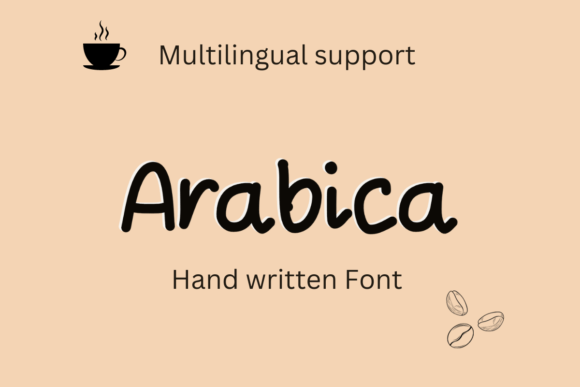
When I opened the font file and typed my first word with Arabica, I didn't just see letters. I felt an atmosphere. This isn't a cold, technical typeface. It’s a warm, confident whisper. There’s a grounded elegance here—the strokes are fluid and organic, but they have a clear backbone. It feels like the comfortable, stylish handwriting of someone who knows what they’re talking about, but isn’t trying too hard to impress. That first impression told me immediately that Arabica belongs in projects that value authenticity and approachable premium quality.
A Design Personality Built for Connection
Arabica’s visual personality sits in a really useful space. It’s clearly a script font, but it leans away from the overly dramatic or vintage. It’s more of a modern typography take on a handwritten feel. The letters have a consistent, rhythmic flow without being perfectly uniform, which gives it that human touch. The mood it creates is inviting, trustworthy, and slightly artisanal. It doesn’t scream "luxury," but it confidently suggests quality and care. I started picturing it immediately on coffee shop branding, independent skincare labels, crafted food packaging, and the websites of creators who sell their own work. It has a natural affinity for businesses built on a personal story or a tangible product.
Putting Arabica to Work in Real Projects
In practical application, Arabica performs beautifully where personality is the priority. For logo design or a brand mark, especially for small businesses or solo entrepreneurs, it can be the entire voice. A business name set in Arabica often feels complete without needing extra symbols or graphics. In packaging design and product labels, it adds that handcrafted note perfectly—think of it on a jar of honey, a bag of specialty tea, or a candle box. For social media graphics and digital ads, it instantly elevates a post to feel more intentional and designed, cutting through the clutter of standard sans-serif posts.
It’s also a strong candidate for printable products and digital design assets. In Canva templates for wedding invitations or workshop flyers, it provides a sophisticated yet friendly base. For Cricut projects, the clean, connected strokes are ideal for cutting and engraving on physical merchandise like mugs or tote bags. In editorial design, using it for pull quotes or section headers in a magazine or blog post brings a tactile contrast to body text. As a website header, it sets a welcoming tone from the moment a visitor arrives.
The Practical Ground Rules for Using This Font
Like any good display font, Arabica has its sweet spots. It thrives in large headlines and short phrases. Its full personality shines when given space. It’s excellent for a brand name, a key slogan, a product title, or a decorative accent word. You can absolutely use it for longer quotes in posters or blog graphics, but you must maintain a sufficient size. This is not a font for paragraphs, supporting text, or any small functional copy. Its strength is in making a deliberate, stylistic statement.
Where to Apply Extra Caution
Readability is the main consideration. At small sizes, the elegant connections between letters can become fragile and blur, especially in print or on low-resolution screens. Always check small-size readability on actual mockups. I also recommend testing it in black and white first. This strips away the distraction of color and lets you judge its form and impact purely. If it holds authority in grayscale, you know it’s a strong choice.
Another key test is comparing uppercase and lowercase. Often, the lowercase of a script like Arabica is where the magic lives, and the uppercase might be used more sparingly for initial letters. Also, review the spacing. In some layouts, you might need to manually adjust letter spacing in a logo to perfect the connections. Finally, never skip the step to confirm commercial licensing before using it in client work or for your own business products. Knowing you have the right license is fundamental to professional use.
How Arabica Shapes Brand Perception and Hierarchy
Choosing a font like Arabica is a strategic design decision. It directly affects brand consistency. Because it’s so distinctive, using it consistently across your brand identity—from your logo to your packaging to your social posts—creates a strong, memorable thread. This builds audience trust and recognition; people start to associate that warm, handwritten style with your product or service.
It also manages visual hierarchy powerfully. On a poster crowded with information, an Arabica headline will naturally dominate and guide the viewer’s eye first. It creates visual mood effortlessly, setting a tone of creativity and personal attention. This can increase engagement, as the design feels more crafted and less generic. For the brand owner or content creator, it signals a level of care and professionalism that goes beyond just picking a default system font.
Finding the Right Partners: Font Pairing with Arabica
Arabica shouldn’t work alone. It needs a supporting cast. My standard process is to test it beside a serif font, sans serif font, and even other more casual handwritten fonts. A clean, neutral sans-serif font for body text (think for website paragraphs, product descriptions, or fine print on packaging) is almost always the safest and most effective partner. It lets Arabica shine as the personality without creating a visual conflict. A classic serif font can also work for a more traditional, editorial feel. Avoid pairing it with another dominant script font or display font; that usually leads to competition rather than harmony.
In the end, Arabica is a creative font with a very specific charm. It’s not for every project. But for the projects where a sense of human touch, crafted quality, and approachable sophistication is the goal, it becomes an invaluable design asset. My final advice is always to try it on real mockups. Put it on a fake product label, drop it into a website header template, or see how it looks as a quote overlay on a photo. That’s where you’ll see if Arabica’s warm whisper is the right voice for your story.